

R-Value vs. Reality: Why Fairbanks Winters Demand Specialized Building Envelopes
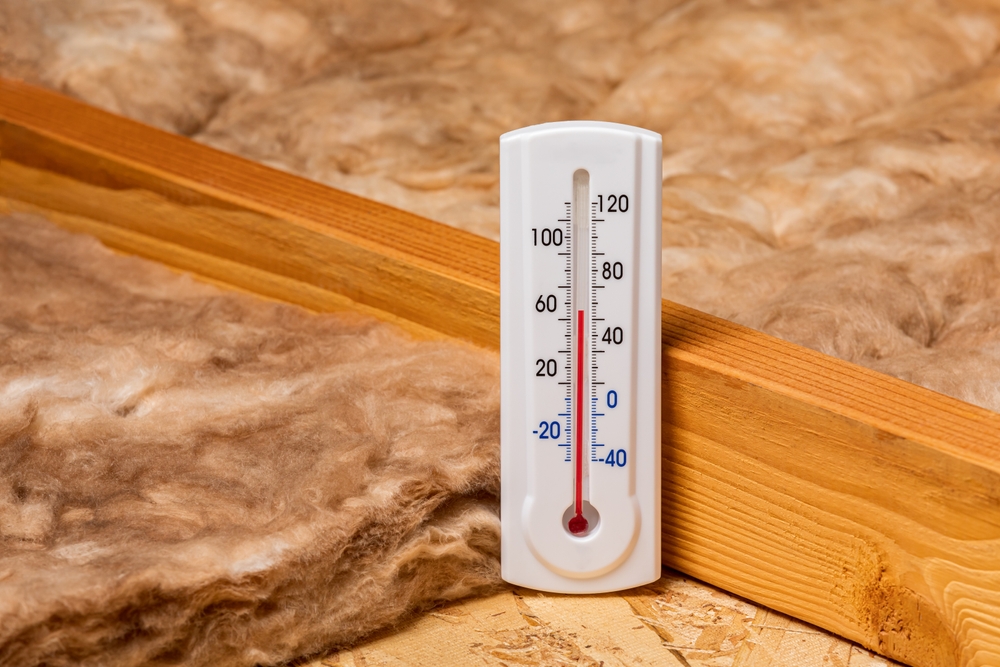
February 21, 2026 4:27 pm Leave your thoughtsIf you have ever lived through a Fairbanks winter, you already know that the cold here is not just a number on a thermometer. It is a sustained, bone-deep force that tests every seam, joint, and material in your home. Temperatures regularly drop to minus 40 or colder, and the heating season stretches across more than half the calendar year. In this environment, the standard approach to insulation simply does not hold up. Builders and homeowners in Fairbanks, AK need to think beyond the basics and invest in arctic building envelope design that treats extreme cold as the primary engineering challenge, not an afterthought.
This blog breaks down why conventional R-value guidance falls short in Interior Alaska, what a truly high-performing building envelope looks like in subarctic conditions, and how to make smarter decisions when building or retrofitting in one of North America’s most demanding climates.
Understanding R-Value and Why It Only Tells Part of the Story
R-value measures a material’s resistance to heat flow. The higher the number, the better the material slows heat from escaping through walls, roofs, and floors. For most of the United States, following Energy Star or building code minimums gets homeowners reasonably close to an efficient, comfortable home. In Alaska, and especially in Fairbanks, that logic breaks down quickly.
The problem is that R-value is measured under controlled laboratory conditions at a steady temperature difference of about 75 degrees Fahrenheit. In Fairbanks, the real-world temperature difference between your interior living space and the outside air can exceed 130 degrees on the coldest days. At those extremes, even materials with high rated R-values begin to underperform because heat transfer physics become more aggressive and thermal bridging through studs, fasteners, and framing becomes a much larger share of total heat loss.
Beyond the raw number, moisture is a constant threat. When warm interior air meets cold structural elements, condensation forms inside wall assemblies. Over time, moisture degrades insulation performance, promotes mold, and rots structural components. In a standard wall, this might be a nuisance. In Fairbanks, where the cold season is relentlessly long, it can mean catastrophic building failures over just a few years without proper vapor management integrated into the envelope design.
What Arctic Building Envelope Design Actually Requires
Designing a building envelope for Interior Alaska means treating the entire assembly as an interconnected system, not a collection of separate layers. The best insulation for Fairbanks, AK is not just about which product has the highest R-value per inch. It is about how insulation layers work together with air barriers, vapor retarders, structural elements, and exterior cladding to manage heat, moisture, and air simultaneously.
A well-designed arctic building envelope typically relies on multiple insulation layers placed strategically to push the dew point (the location where condensation forms) toward the outside of the assembly rather than allowing it to sit within the structural frame. This is often achieved by combining a thick layer of continuous exterior insulation with dense-pack insulation in the stud cavities. Continuous insulation eliminates thermal bridging through the framing, which can account for 20 to 30 percent of heat loss in a standard framed wall.
Air sealing is equally critical. In Fairbanks, even tiny gaps in the building envelope allow enormous quantities of heat to escape through air leakage. Studies of Alaskan homes have consistently shown that air sealing improvements often deliver more energy savings per dollar than adding more insulation. This means every penetration, outlet box, window rough opening, and rim joist must be carefully sealed during construction or renovation.
High R-Value Insulation Options Best Suited for Fairbanks
When it comes to selecting the right high R-value insulation for conditions in Fairbanks, several product categories stand out for their performance in extreme cold.
Spray polyurethane foam, particularly closed-cell spray foam, offers some of the highest R-values per inch available, typically around R-6 to R-7 per inch. More importantly, closed-cell foam acts as both an insulator and an air and vapor barrier in a single application. This makes it especially useful for sealing complex geometries and areas where traditional batt insulation would leave gaps. In Fairbanks homes, closed-cell foam is frequently used at rim joists, crawl spaces, and roof assemblies where air sealing is most critical.
Dense-pack cellulose and dense-pack fiberglass are widely used in wall cavities throughout Alaska because they can be blown into existing cavities without major demolition and they resist settling over time. Cellulose has the added benefit of being able to absorb and release small amounts of moisture without losing structural integrity, which gives it a slight advantage in mixed-humidity conditions.
Rigid foam boards, including expanded polystyrene (EPS) and polyisocyanurate, are the go-to solution for continuous exterior insulation. EPS in particular holds up well in cold and wet conditions and does not lose significant R-value in extreme cold the way polyisocyanurate can. A thick layer of EPS applied to the exterior of the wall assembly can dramatically reduce thermal bridging and move condensation risk out of the structural zone.
For new construction in Fairbanks, many builders are now combining these approaches, using dense-pack insulation in double-stud walls with R-values of 40 or more, along with exterior continuous insulation and meticulous air sealing. This layered strategy produces homes that can maintain comfortable interior temperatures even during extended cold snaps with minimal heating output.
Permafrost, Ground Contact, and the Foundation Challenge
No discussion of arctic building envelope design in Fairbanks would be complete without addressing what happens below grade. Much of the Fairbanks region sits on discontinuous permafrost, and the way a building interacts with the ground is just as important as its above-grade insulation strategy.
Traditional full basements are generally avoided in areas with permafrost because excavation disturbs the frozen ground and can cause differential settling over time. Instead, many Fairbanks buildings are constructed on elevated post foundations or insulated slab-on-grade systems designed to either keep the ground beneath the building frozen or prevent frost heave from damaging the structure.
When using a slab-on-grade approach on stable ground, sub-slab insulation becomes a major priority. Installing a thick layer of rigid foam beneath the slab prevents ground cold from radiating upward into the living space, which can be a significant source of heat loss and discomfort. For homes on posts or piers, the crawl space or under-floor area must be insulated and air-sealed to prevent cold air from continuously cycling beneath the floor.
Getting the foundation strategy right is not just a comfort issue in Fairbanks. It is a long-term structural question, and it requires working with builders and engineers who have specific experience with Alaska’s ground conditions and frost behavior.
Working with Local Expertise to Get It Right
The best insulation for Fairbanks, AK is ultimately the system that a knowledgeable local builder installs correctly. Product specs and R-value charts only take you so far. In Interior Alaska, the margin for error is small and the cost of getting it wrong, in terms of energy bills, moisture damage, and structural repairs, can be severe.
Fairbanks has a community of builders, energy auditors, and architects with deep experience designing for extreme cold. Organizations like the Cold Climate Housing Research Center (CCHRC), based in Fairbanks, have spent decades testing building assemblies in subarctic conditions and publishing practical guidance for Alaska-specific construction. Their research is an invaluable resource for anyone building or retrofitting in the region.
Before starting a project, getting a comprehensive energy audit from a certified professional who understands Alaska’s climate is one of the most valuable investments a homeowner can make. An audit identifies where your current building envelope is losing the most energy and guides insulation and air sealing priorities in a way that generic national guidance simply cannot replicate.
Conclusion
Fairbanks winters are in a category of their own, and the building envelopes that perform well here must reflect that reality. R-value is a useful starting point, but it cannot capture everything that matters in a subarctic climate: thermal bridging, vapor management, air sealing, permafrost interaction, and the sustained intensity of months-long cold exposure. Investing in a thoughtful, layered approach to arctic building envelope design, with high R-value insulation products installed by experienced local professionals, is the most reliable path to a home that stays warm, dry, and structurally sound through every Fairbanks winter.
Got questions? Let us help! Call us today to learn more!
Categorised in: Tips
This post was written by admin