OSHA in the Arctic: Essential Safety Gear and PPE for Alaska’s Industrial Workforces
September 4, 2026 5:59 pm Leave your thoughtsWorking outdoors or inside an industrial facility in Alaska can mean dealing with cold, snow, ice, wind, low-light conditions, heavy equipment, and changing weather during the same shift. For Anchorage-area employers, PPE decisions need to address both the hazards of the job and the conditions workers face while performing it.
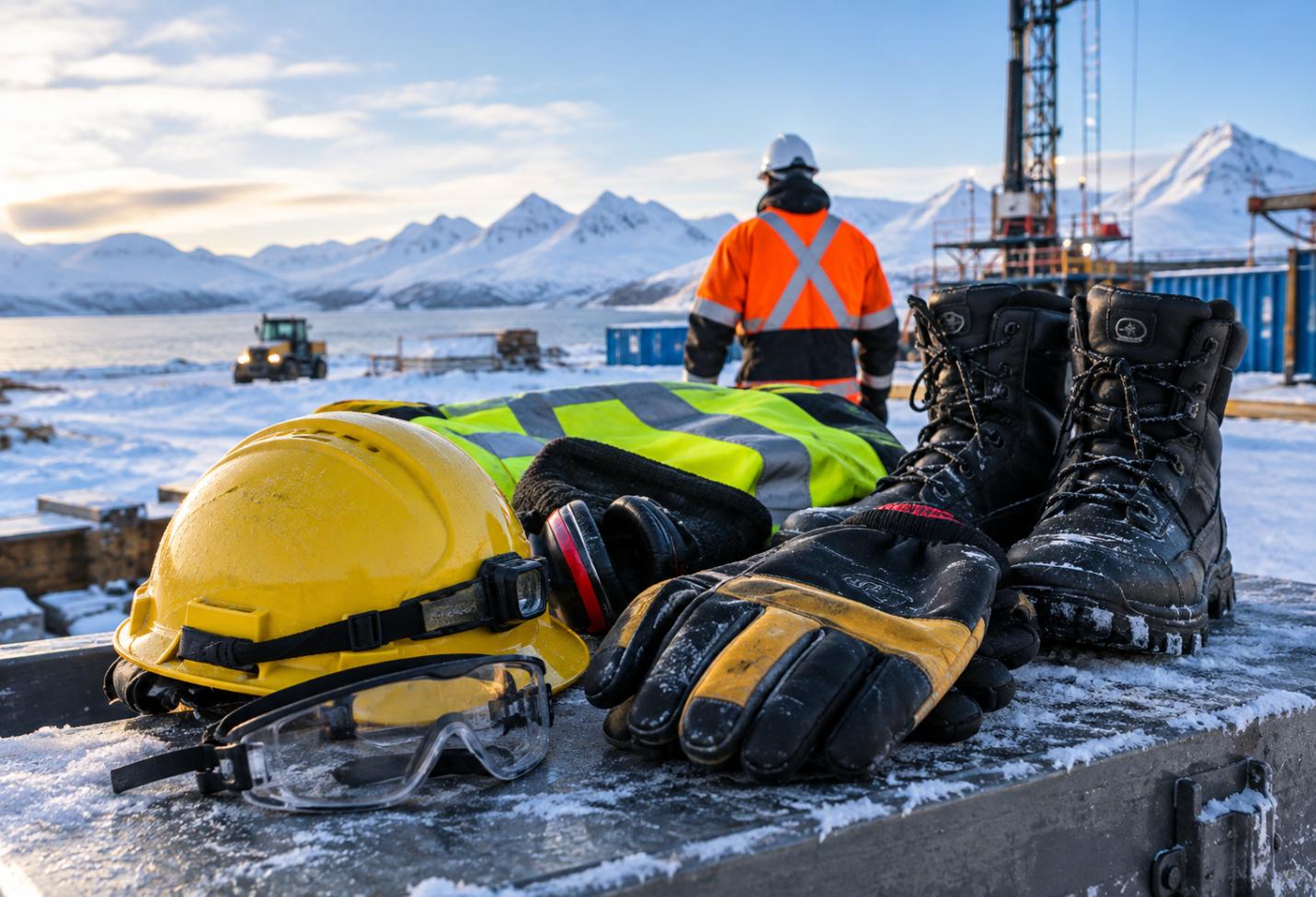
The essential safety gear for Alaska’s industrial workforces depends on a documented assessment of workplace hazards. Depending on the task, that may include head, eye, face, hand, foot, hearing, respiratory, high-visibility, fall-protection, and cold-weather equipment. Employers also need to consider whether PPE fits properly, works together as a system, and remains effective in Alaska conditions.
What local employers should know
-
Alaska operates its own occupational safety and health program, Alaska Occupational Safety and Health, commonly called AKOSH.
-
PPE selection should follow the hazards workers actually encounter rather than relying on a one-size-fits-all equipment list.
-
Anchorage winters can add cold, snow, ice, darkness, and reduced dexterity to hazards already present on industrial jobsites.
-
PPE must work as a system, since bulky winter clothing can affect the fit and function of other protective equipment.
-
Respiratory protection, fall protection, hearing protection, and other specialized PPE may involve requirements beyond simply purchasing and issuing equipment.
Why Does PPE Matter for Anchorage’s Industrial Workforces?
PPE matters for Anchorage’s industrial workforces because ordinary occupational hazards can overlap with cold, ice, snow, wind, and seasonal darkness. A worker may need protection from impact, noise, airborne contaminants, or falls while simultaneously maintaining warmth, visibility, mobility, and adequate grip.
Alaska’s occupational safety program adds an important compliance dimension. AKOSH operates within the Alaska Department of Labor and Workforce Development and enforces occupational safety and health requirements in the state. Alaska has adopted numerous federal OSHA regulations by reference.
That makes hazard-specific PPE selection important for businesses operating around Anchorage, the Port of Alaska, Ship Creek, Midtown, the Glenn Highway corridor, and industrial areas serving communities throughout Southcentral Alaska.
Superior Products Inc. serves Anchorage, AK, where industrial safety equipment has to make sense for the actual environment in which it will be used. We encourage businesses to evaluate gear around specific job hazards, working conditions, fit, and compatibility rather than treating PPE as a generic checklist.
What Do Alaska Safety Requirements Say About PPE?
Alaska safety requirements call for employers to protect workers from recognized hazards and comply with applicable occupational safety and health standards, including PPE requirements adopted in the state. AKOSH guidance specifically identifies an effective PPE program as an element that may be evaluated during workplace inspections.
Alaska’s AKOSH Field Operations Manual references standards including 29 CFR 1910.132 for general PPE and 29 CFR 1910.134 for respiratory protection. AKOSH also emphasizes that PPE does not automatically eliminate an exposure when engineering or administrative controls are required.
For employers, that distinction matters. A hard hat, respirator, gloves, or safety footwear should not be viewed as a substitute for correcting a hazard when another control is required.
AKOSH also provides consultation and training services designed to help Alaska employers recognize and evaluate workplace hazards.
What PPE Challenges Are Different in Alaska?
Alaska PPE challenges often involve maintaining protection while workers contend with cold temperatures, slippery surfaces, bulky clothing, moisture, and limited winter daylight. Equipment that works well under mild conditions may become harder to use effectively when workers add insulated layers or move repeatedly between heated and unheated spaces.
For example, winter gloves can provide warmth but reduce dexterity. Safety glasses or goggles can fog. Snow and ice can make traction more important. Heavy outerwear can affect movement and may interfere with other equipment if the overall system has not been evaluated properly.
Around Anchorage and Southcentral Alaska, freeze-thaw conditions can also create changing walking and working surfaces. Snow tracked into shops, warehouses, loading areas, and entryways can introduce additional slip hazards.
The goal is not simply adding more PPE. It is selecting compatible protection for the worker, task, and environment.
What Are the Warning Signs That an Industrial PPE Program Needs Attention?
An industrial PPE program needs attention when workers struggle with fit, frequently remove protective equipment, use damaged gear, or improvise around equipment that does not function well in actual job conditions. Anchorage employers should treat recurring PPE problems as signals to reassess hazards and equipment selection.
Watch for:
-
Safety glasses or goggles that repeatedly fog and obstruct vision.
-
Gloves that are too bulky for safe equipment operation or too light for the working conditions.
-
Cracked, worn, contaminated, or otherwise damaged protective equipment.
-
Safety footwear that lacks appropriate traction for the surfaces workers encounter.
-
Workers removing hearing, eye, hand, or respiratory protection to complete routine tasks.
-
Winter layers interfering with the proper use of other required protective equipment.
-
PPE sizes that do not provide individual workers with an appropriate fit.
-
Employees who are unclear about when particular PPE is required or how it should be maintained.
These signs call for more than replacing a worn item. They may indicate a need to revisit the underlying hazard assessment, work practices, training, or PPE program.
When Should an Employer Get Professional Safety Guidance?
Employers should seek qualified safety guidance when they cannot confidently identify a hazard, determine the applicable requirements, or select PPE that provides appropriate protection. Specialized exposures involving respirators, hazardous substances, fall hazards, high noise, electrical work, or other serious risks deserve particular care.
Workers can participate by reporting damaged equipment, fit problems, changing conditions, and hazards they observe. Employers, however, remain responsible for determining what controls and protections are required.
AKOSH offers free and confidential consultation and training assistance for employers, including help recognizing and evaluating workplace hazards. For complex compliance questions, employers should consult the applicable AKOSH requirements or a qualified occupational safety and health professional.
What Are Common PPE Needs on Alaska Industrial Jobsites?
Common PPE needs on Alaska industrial jobsites include protection for the head, eyes, face, hands, feet, hearing, respiratory system, and body, but the correct combination depends on the hazards of each task. Cold-weather and visibility considerations may also influence equipment selection in Anchorage-area workplaces.
1. Head protection: Industrial operations with falling, flying, or overhead hazards may require appropriate head protection. Winter accessories must not compromise the intended fit or function of required equipment.
2. Eye and face protection: Grinding, cutting, chemicals, flying particles, and other tasks can require safety eyewear or face protection. In Alaska, employers may also need to consider fogging and temperature transitions.
3. Hand protection: Gloves should match the hazard, whether workers face cuts, abrasion, chemicals, cold, or another exposure. The ability to safely grip tools and controls remains important.
4. Foot protection: Industrial footwear may need to address impact or compression hazards while also providing appropriate performance on the surfaces and in the weather employees encounter.
5. Hearing protection: Shops, machinery, construction operations, and industrial equipment can create significant noise exposure. Hearing protection should be selected as part of an appropriate noise-control program.
6. Respiratory protection: Respirators require more than choosing a mask from a shelf. Where respiratory protection is required, employers need to follow the applicable respiratory protection requirements.
7. High-visibility and protective clothing: Workers around traffic, equipment, loading areas, or low-light conditions may need enhanced visibility or task-specific protective clothing.
How Can Anchorage Employers Maintain PPE Through the Seasons?
Anchorage employers can maintain PPE more effectively by inspecting equipment routinely, replacing damaged items, storing gear correctly, and reassessing how seasonal conditions affect its use. Fall is an especially useful time to evaluate winter equipment before snow, ice, and reduced daylight become regular jobsite conditions.
Check PPE for wear, cracks, contamination, damaged straps, compromised closures, or other conditions that could affect performance. Make sure workers have appropriate sizes and understand how equipment should be inspected, cleaned, stored, and used.
Winter preparation should also consider the interaction between insulated clothing and required PPE. Spring can bring its own problems as melting snow, standing water, mud, and freeze-thaw cycles change jobsite conditions around Anchorage and the Mat-Su region.
DIY inspection should stop where specialized knowledge is required. Respirator programs, fall-protection systems, hazardous exposures, and compliance determinations should be handled according to applicable requirements and qualified guidance.
What Results Should Employers Expect From Better PPE Planning?
Better PPE planning should produce equipment that is more appropriate for identified hazards, easier for workers to use correctly, and better suited to actual workplace conditions. It can also reveal situations where the better solution is an engineering control, administrative control, or change in work practices rather than additional protective gear.
Employers should not expect PPE to eliminate every workplace risk. AKOSH guidance recognizes that PPE can be only one part of controlling an exposure.
For Alaska businesses, the practical goal is a safety program that still functions when temperatures drop, snow accumulates, daylight shortens, and work continues.
What PPE Mistakes Should Alaska Employers Avoid?
Alaska employers should avoid selecting PPE solely by category or price without considering the specific hazard, fit, compatibility, and working environment. Equipment that technically belongs to the right category can still be unsuitable for a particular worker or task.
Mistake: Choosing one glove for every job.
Consequence: Workers may lack the protection, dexterity, grip, or warmth needed for particular tasks.
Better approach: Match hand protection to the identified hazard and working conditions.
Mistake: Treating winter clothing and PPE as separate systems.
Consequence: Layers can interfere with fit, movement, visibility, or other protective equipment.
Better approach: Evaluate how the complete combination works together.
Mistake: Assuming PPE solves the hazard.
Consequence: A more fundamental control may be overlooked.
Better approach: Use PPE within the broader hierarchy and requirements for hazard control.
Mistake: Waiting for winter to inspect winter gear.
Consequence: Equipment shortages or fit problems may appear after conditions deteriorate.
Better approach: Review cold-weather needs before Anchorage’s winter season is established.
What Is a Common Anchorage Industrial PPE Scenario?
A common Anchorage industrial PPE scenario is a worker moving between a heated facility and an outdoor loading or work area during winter. The employee may encounter temperature changes, snow or ice underfoot, vehicle traffic, machinery, and reduced daylight during the same work period.
The appropriate solution is not simply handing the worker an insulated coat and gloves. Employers need to consider the hazards associated with the job, the protection required for those hazards, and whether cold-weather layers affect the performance of other equipment.
This is a common local scenario, not a description of a specific Superior Products Inc. customer or project.
What Safety Equipment Solutions Should Businesses Consider?
Businesses should consider safety equipment solutions based on their hazard assessments, job tasks, workforce, and Alaska working conditions. That may involve evaluating head protection, safety eyewear, gloves, footwear, hearing protection, protective clothing, visibility gear, and other job-specific equipment.
We can help businesses explore industrial safety and PPE options appropriate to their operational needs without treating equipment selection as a substitute for a formal workplace safety assessment.
How Should Employers Compare PPE Options?
Employers should compare PPE options by protection requirements, fit, compatibility, working conditions, durability, and the tasks employees actually perform. In Anchorage, cold-weather usability and interaction with winter clothing may deserve additional consideration.
A less expensive item is not necessarily the lower-cost choice if employees cannot use it effectively or it does not suit the hazard. Likewise, heavier or more elaborate equipment is not automatically safer.
Start with the hazard. Determine the applicable requirements. Then compare equipment that meets those needs and works properly with the rest of the employee’s protective system.
Where Do Alaska Industrial Safety Needs Extend Beyond Anchorage?
Industrial safety needs extend from Anchorage into surrounding Southcentral Alaska communities where construction, transportation, utilities, warehousing, maintenance, and other industries face many of the same seasonal challenges. Eagle River, Chugiak, Palmer, and Wasilla businesses can all experience winter conditions that affect PPE use and jobsite safety.
Conditions can vary considerably across Alaska, so employers working farther north or at remote sites should assess the environment and hazards specific to those operations rather than assuming Anchorage conditions apply statewide.
What Can Happen When PPE Problems Are Ignored?
Ignoring PPE problems can leave workers exposed to hazards and can allow small equipment or program deficiencies to become larger safety and compliance concerns. A scratched lens, worn glove, poor fit, or recurring fogging issue can also encourage workers to adjust or remove equipment when they need it.
AKOSH enforcement includes workplace inspections and enforcement of applicable occupational safety and health requirements. Employers should address known hazards and PPE deficiencies promptly rather than waiting for an incident or inspection to reveal them.
FAQ
Does OSHA apply to workplaces in Anchorage, Alaska?
Yes. Alaska operates an OSHA-approved state occupational safety and health program through AKOSH. Alaska has adopted numerous federal OSHA standards by reference while also maintaining state requirements. Employers should determine which standards apply to their industry, hazards, and specific operations rather than assuming every workplace has identical obligations.
What PPE do Anchorage industrial workers need in winter?
Anchorage industrial workers need PPE based on their job hazards, with winter conditions considered when selecting and using that equipment. Depending on the work, protection may include appropriate head, eye, hand, foot, hearing, respiratory, visibility, or body protection along with cold-weather clothing that does not compromise required PPE.
Does AKOSH require employers to provide PPE?
Applicable Alaska occupational safety and health standards establish employer responsibilities for protecting workers, including PPE requirements in covered circumstances. The exact obligation depends on the hazard and applicable standard. Employers should review current AKOSH requirements for questions involving required equipment, employee training, payment, and specific workplace exposures.
Why is PPE fit especially important for Alaska workers?
PPE fit is important for every workforce, but Alaska’s winter layers can make compatibility more complicated. Insulated clothing, gloves, headwear, and footwear may alter movement or interact with other protective equipment. Anchorage employers should evaluate workers wearing the complete combination of equipment needed for actual job conditions.
Can an N95 or other respirator simply be issued when workers encounter dust?
Respiratory protection requirements can involve more than issuing a respirator. Where respirators are required, employers must follow applicable respiratory protection standards, including requirements relevant to the specific situation. Anchorage businesses dealing with airborne hazards should evaluate the exposure and applicable requirements rather than choosing respiratory protection by appearance alone.
How often should industrial PPE be inspected in Anchorage?
Industrial PPE should be inspected at the frequency required by the applicable equipment, hazard, manufacturer guidance, and safety program, including checks that identify damage before use where appropriate. Anchorage employers may also benefit from seasonal reviews before winter because cold, moisture, snow, and additional clothing can change how equipment performs.
Can PPE replace other workplace safety controls in Alaska?
No, not automatically. AKOSH guidance makes clear that PPE may not adequately prevent exposure when applicable standards require engineering or administrative controls as well. Employers should identify the hazard first and determine the proper combination of controls instead of relying on PPE as the sole solution.
Where can Anchorage employers get help understanding AKOSH requirements?
Anchorage employers can use Alaska Occupational Safety and Health resources through the Alaska Department of Labor and Workforce Development. AKOSH also offers free, confidential consultation and training assistance designed to help employers recognize and evaluate workplace hazards. Complex compliance decisions may also warrant assistance from a qualified safety professional.
Build a PPE Program Ready for Alaska Working Conditions
Industrial safety in Anchorage requires equipment that addresses the actual job as well as the environment where that job gets done. By assessing hazards, selecting compatible PPE, maintaining equipment, and preparing for seasonal changes, employers can build a stronger approach to protecting Alaska workers.
Equip Your Anchorage Workforce for the Work Ahead
We help local businesses explore PPE and industrial safety equipment for demanding Alaska workplaces.
Categorised in: Tips
This post was written by admin