
Why ‘Off-the-Shelf’ Doesn’t Work: The Case for Custom-Trimmed Steel in the Last Frontier
June 4, 2026 4:22 pm Leave your thoughtsBuilding in Alaska is not like building anywhere else in the United States. From the wind-scoured coasts of the Aleutian Islands to the permafrost plains of the Interior, the environment in AK tests every fastener, every panel, and every inch of trim in ways that most building product manufacturers never account for. Temperatures can swing from -60 degrees Fahrenheit in winter to over 90 degrees in summer in some regions, and that kind of thermal expansion and contraction alone is enough to compromise materials that were engineered with milder climates in mind.
When a contractor or homeowner reaches for a pre-packaged trim kit at a national chain store, they are grabbing a product designed to serve the broadest possible market. That means coastal Georgia, suburban Ohio, and central Texas all get the same solution. Alaska does not fit into that equation. The structural and climatic demands of the Last Frontier require components that are selected, cut, and configured with the specific job site in mind. Custom metal roofing trim is not a luxury in this state; it is the logical response to a climate that does not tolerate shortcuts.
What Big Box Stores Actually Sell You
Walk into any major home improvement retailer and you will find pre-bent trim pieces in standard lengths, typically 10 or 12 feet, packaged and stacked for a nationwide audience. These are produced in high volumes with tolerances wide enough to cover a variety of common applications. For mild-climate residential projects, that approach can work fine. For Alaska, it introduces a series of compromises that compound over time.
The first issue is fit. Professional roofing components vs big box stores comes down to precision. A pre-cut ridge cap or eave trim that is close to the right dimension is not the same as one that is exactly right. Even a small gap at a transition point creates an entry path for wind-driven snow, which in Alaska can pack into crevices with enough force to lift panels and dislodge fasteners. The second issue is material gauge. Box store trim is frequently produced from lighter gauge steel because it reduces shipping weight and cost. In a region where snow loads routinely exceed what the Lower 48 experiences, thinner steel flexes, fatigues, and eventually fails faster than properly specified material.
Steel siding fasteners present an equally important comparison. The fasteners sold in bulk bins at retail stores are often zinc-plated or lightly coated, built to meet minimum corrosion resistance standards in average conditions. In coastal AK communities like Juneau, Ketchikan, or Kodiak, salt air and persistent moisture will eat through standard fasteners in a fraction of the time it would take in an inland location. Stainless steel or high-quality hot-dipped galvanized fasteners are not always easy to find off the shelf, and when they are available, they may not come in the lengths or drive styles that a specific application requires.
The Precision Advantage of Custom-Cut Trim
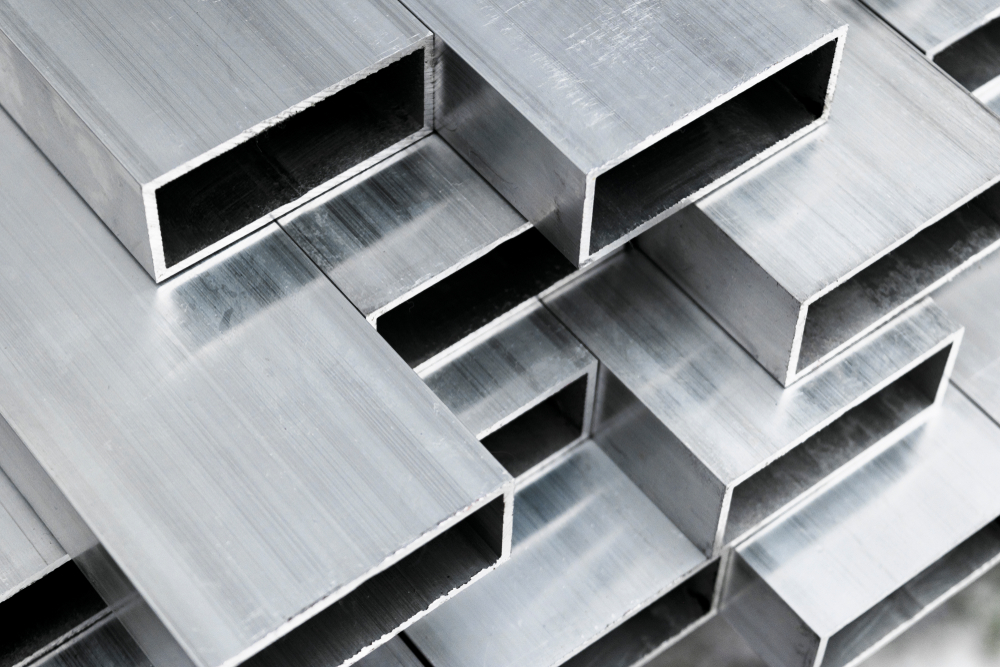
Custom metal roofing trim starts with an accurate field measurement or a detailed set of drawings. A fabricator takes those dimensions and produces trim pieces to exact specifications, whether that means a non-standard leg length on a gable trim, a steeper pitch on a ridge cap, or a profile designed to integrate with a specific panel system. Nothing is approximated. Nothing is forced to fit.
This matters enormously on complex rooflines, which are common in Alaska because steep pitches are used to shed snow before it can accumulate to dangerous weights. A roof with a 12:12 or steeper pitch has angles and transitions that do not correspond to any standard trim profile sitting on a shelf in a warehouse somewhere. Attempting to use off-the-shelf trim on a steep-pitch metal roof in AK means field modifications, which introduce cut edges that need to be sealed, bends that may crack the coating, and transitions that are never quite clean. Every improvised joint is a potential failure point.
Custom fabrication also allows for the use of proper coatings and finishes from the start. Kynar 500 or similar PVDF coatings offer dramatically better UV and corrosion resistance than the polyester finishes common on commodity trim. In a state where summer UV exposure at higher latitudes can be intense and coastal environments are aggressive, the coating specification is not a minor detail. It is part of the long-term performance equation.
Why Professional Roofing Components Outperform Retail Options
The argument for professional roofing components vs big box stores is ultimately an argument about total cost over time. A trim package sourced from a professional supplier and fabricated to spec will almost certainly cost more upfront than a stack of pre-packaged pieces from a chain store. That cost difference is real, and it is worth examining honestly.
What is also real is the cost of a callback. In Alaska, sending a crew back to a job site is not the same as driving across town. Many job sites in AK are accessible only by small plane or boat. A failure in a flashing joint or a fastener pull-out on a remote project can mean chartering a flight, waiting for a weather window, and spending more on the repair than the original savings from cheaper materials would ever justify. The math points clearly in the direction of getting it right the first time.
Steel siding fasteners specified for the actual exposure condition of a project, combined with trim fabricated to fit the actual geometry of the structure, represent an investment in durability rather than an acceptance of eventual replacement. Professional suppliers understand the range of conditions across AK and can guide material selection based on coastal versus inland exposure, altitude, and the specific panel system being installed. That expertise does not exist at a retail checkout counter.
Contractors who build their reputations in Alaska understand this. The state has a small enough population and a tight enough professional community that a failed roof or a rusted-out trim package reflects directly on the installer. Using properly specified components is as much a business decision as it is a technical one.
Sourcing Custom Trim and Fasteners in Alaska
The good news is that custom metal roofing trim and properly rated steel siding fasteners are accessible to Alaskan contractors and builders who know where to look. Several regional metal fabricators operate within the state, and national suppliers with experience in northern climates can ship to AK with reasonable lead times when orders are planned in advance.
Working with a supplier who understands the specific demands of the Alaskan climate is the starting point. That means asking questions about coating systems, base metal thickness, and fastener material before placing an order rather than after a problem shows up. It also means providing accurate measurements and drawings so that custom-cut components arrive ready to install without field modification.
For remote projects, lead time planning is critical. Custom fabrication requires more coordination than pulling product off a shelf, and shipping to bush communities adds time. Building that schedule into a project from the beginning prevents the kind of last-minute substitutions that result in using whatever happens to be available locally, which often means reverting to exactly the kind of undersized, undercoated components that create problems down the road.
Conclusion
Alaska is unforgiving to buildings that were assembled with components designed for somewhere else. Custom metal roofing trim, properly specified steel siding fasteners, and professional roofing components sourced with AK conditions in mind are not upgrades. They are the baseline for work that is meant to last. The cost of doing it right is always lower than the cost of doing it twice, and in the Last Frontier, doing it twice is genuinely expensive.
Got questions? Let us help! Call us today to learn more!
Categorised in: Metal Sales
This post was written by admin