Beating the Dust: How Alaska’s Industrial Sites and Rural Roads Can Improve Air Quality This Summer
June 4, 2026 4:22 pm Leave your thoughtsSummer in Alaska brings long days, outdoor adventure, and unfortunately, dust. From the unpaved haul roads stretching across the Interior to the sprawling industrial yards near Fairbanks and Anchorage, airborne particulate matter becomes a serious concern once the ground thaws and traffic picks up. For road crews, site managers, and environmental compliance officers, the window between spring breakup and the first autumn frost is the critical season to act.
Fortunately, modern dust suppression chemicals and road stabilization techniques have advanced significantly, giving Alaskan operations more effective and environmentally responsible tools than ever before.
Why Dust Is More Than Just a Nuisance in Alaska
Most people think of dust as an inconvenience, something that coats your windshield or kicks up behind a passing truck. In Alaska, however, the problem runs much deeper. Fairbanks has long struggled with some of the worst particulate air quality in the entire United States. Fine dust particles, known as PM2.5 and PM10, can penetrate deep into the lungs, aggravating respiratory conditions and posing genuine health risks for residents living near unpaved corridors.
The geography of Alaska amplifies the issue. Unlike the contiguous states, where dense road networks often justify asphalt paving, Alaska relies heavily on gravel and dirt roads to connect remote communities, resource extraction sites, and industrial facilities. These surfaces shed material constantly under vehicle traffic, especially during the dry summer months when moisture is minimal and wind is persistent. Seasonal freeze-thaw cycles also loosen road surfaces, making them more prone to generating dust once temperatures rise.
Industrial operations face a compounding challenge. Mining sites, aggregate yards, lumber operations, and construction zones all generate their own dust loads independent of vehicle traffic. Without proper management, this dust can migrate off-site, affect neighboring properties, trigger regulatory violations, and create liability for operators. For anyone sourcing industrial environmental supplies in Alaska, addressing dust at the source is both a legal and ethical priority.
Understanding Dust Suppression Chemicals and How They Work
The core of any effective dust management program is choosing the right product for the right surface and the right conditions. Dust suppression chemicals work through several different mechanisms, and understanding those differences helps operations make smarter purchasing and application decisions.
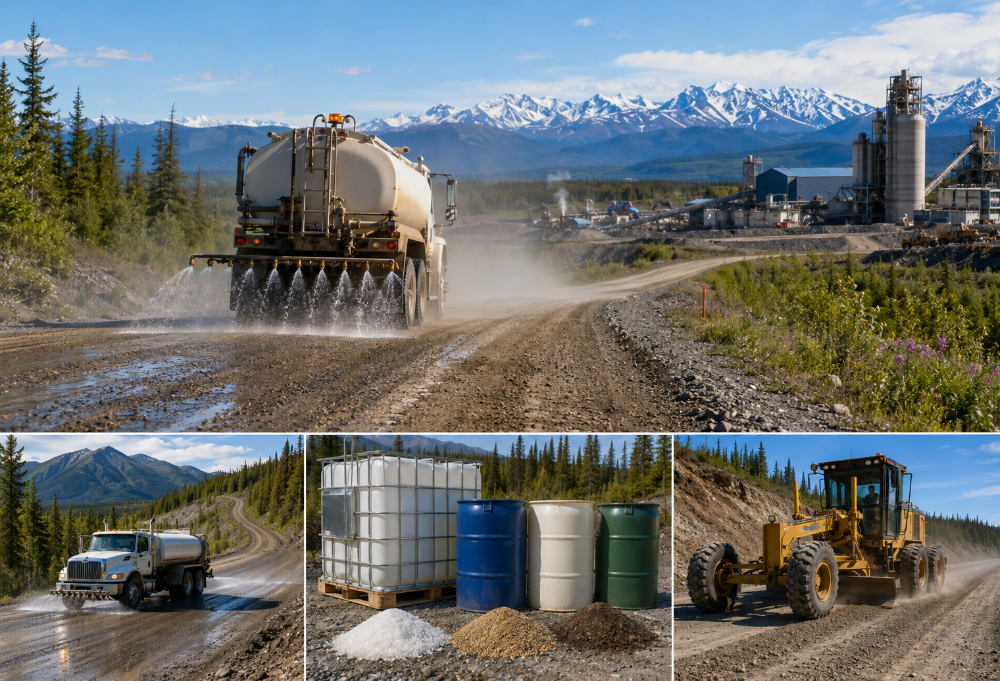
Hygroscopic salts, such as calcium chloride and magnesium chloride, are among the most widely used products in cold-climate road management. These compounds attract and retain moisture from the surrounding air, keeping road surfaces damp enough to bind fine particles together. They are cost-effective and relatively easy to apply, making them popular for gravel roads across the Interior and rural Alaska. However, they can have environmental implications near sensitive water bodies, so placement and application rates need to be managed carefully.
Organic non-chloride products have grown in popularity as a more environmentally friendly alternative. Derived from sources such as sugarcane molasses, distilled tall oil, or lignin sulfonate, these products bind particles through a different mechanism, essentially acting as a natural glue that holds aggregate surfaces together. They break down more readily in the environment and are often preferred near streams, wetlands, or areas with active wildlife concerns, all of which are common considerations in Alaska.
Polymer-based stabilizers represent another category, particularly useful for road stabilization on high-traffic haul roads and industrial access routes. These products penetrate the road base and create a more durable matrix that resists both erosion and surface breakdown. While the upfront cost can be higher, the extended durability often makes them more economical over a full season compared to repeated applications of chloride-based products.
Suppliers of industrial environmental supplies in Anchorage and Fairbanks are increasingly stocking a broader range of these products in response to growing demand from both public road authorities and private operators.
Road Stabilization Strategies for Alaska’s Unique Conditions
Applying dust suppression chemicals is only one piece of the puzzle. Long-term road stabilization in Alaska requires a strategy that accounts for the state’s challenging climate, soil conditions, and the specific demands of each road segment.
One of the most important factors is timing. In Alaska, the optimal application window is relatively narrow. Applying products too early in the spring, when frost is still leaving the ground, can result in poor penetration and wasted product. Waiting too long into summer means the dust problem has already peaked and affected air quality for weeks. Most experienced road managers in Fairbanks and the surrounding Interior aim to apply treatments in late May or early June, targeting surfaces that have stabilized after breakup but before the driest stretch of summer.
Surface preparation also matters enormously. Roads that are heavily rutted, poorly graded, or missing adequate base material will not respond well to chemical treatment alone. Grading and compaction before application dramatically improves the performance of any dust suppression product, ensuring better penetration and more even distribution. Many operations combine mechanical stabilization techniques with chemical applications for maximum effect.
Water availability is another practical concern in remote Alaska. While some products can be mixed with minimal water, others require a proper water truck and reliable source for both mixing and follow-up applications. Operations in areas without easy water access may need to factor this into product selection and logistics planning when sourcing through local industrial environmental supplies distributors.
Regulatory Compliance and Environmental Responsibility
Alaska’s environmental regulatory landscape makes dust management not just a practical matter but a legal one. The Alaska Department of Environmental Conservation (ADEC) monitors air quality in several regions, with Fairbanks being one of the most scrutinized areas due to its history of non-attainment status for particulate pollution. Industrial operations generating significant dust may be subject to air quality permits that set specific limits on emissions and require documented control measures.
Road projects funded through state or federal sources often carry environmental stipulations as part of their contracting requirements. These may specify approved product lists, application rates, and buffer distances from waterways or protected habitat. For operators and contractors working in these regulated environments, choosing dust suppression chemicals that meet applicable standards is not optional.
Environmental responsibility extends beyond compliance. Alaska’s ecosystems are particularly sensitive, and the materials used to control dust can themselves become pollutants if applied improperly. Responsible sourcing means selecting products that are certified for use in sensitive environments, working with suppliers who can provide detailed safety data sheets, and training application crews on proper handling and disposal. Companies that proactively exceed minimum requirements tend to face fewer compliance issues and build stronger relationships with regulatory agencies over time.
Anchorage-based environmental supply companies have reported growing interest from clients seeking third-party certified products that satisfy both performance and ecological standards. This trend reflects a broader shift in how Alaskan industries think about their environmental footprint, not simply as a cost center, but as a meaningful part of operational identity.
Choosing the Right Supplier for Alaska’s Conditions
Alaska is not the lower 48. The logistics of getting products to remote worksites, the demands of cold-storage compatibility, and the nuanced performance requirements of a subarctic climate all mean that choosing the right supplier of industrial environmental supplies is as important as choosing the right product.
Local expertise matters. A supplier based in or deeply familiar with Alaska, whether in Fairbanks, Anchorage, or regional hubs like Kenai or Juneau, will understand application timing, soil types, and the specific regulatory context that out-of-state vendors may not. They are also better positioned to provide timely resupply, technical support, and product adjustments mid-season if conditions change.
Operators should ask suppliers about cold-temperature performance data, shelf life in variable storage conditions, and any case studies or references from comparable Alaskan operations. The best suppliers function as partners, not just vendors, helping operators select, apply, and monitor dust suppression programs with an eye toward both performance and compliance.
Conclusion
Dust control in Alaska is a serious commitment that touches on public health, regulatory compliance, environmental stewardship, and operational efficiency. Whether managing a rural gravel road outside Fairbanks or an industrial yard near Anchorage, the right combination of dust suppression chemicals, road stabilization methods, and knowledgeable industrial environmental supplies partners can make a substantial difference this summer. Acting early, choosing wisely, and working with local expertise are the foundations of a successful dust management season in Alaska.
Got questions? Let us help! Call us today to learn more!
Categorised in: SPI
This post was written by admin